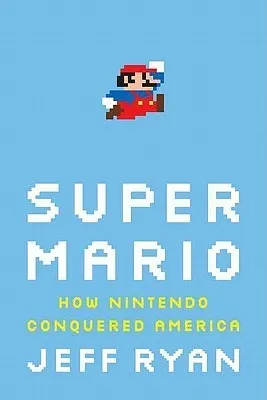
THE FIRST PRINCESS MARIO SAVED WAS NINTENDO ITSELF
In 1981, Nintendo of America was a one-year-old business already on the brink of failure. Its president, Mino Arakawa, was stuck with two thousand unsold arcade cabinets for a dud of a game (Radar Scope). So he hatched a plan.
Back in Japan, a boyish, shaggy-haired staff artist named Shigeru Miyamoto designed a new game for the cabinets featuring an angry gorilla and a small jumping man. Donkey Kong brought in $180 million in its first year alone and launched the career of a short, chubby plumber named Mario.
Since then, Mario has starred in over two hundred games, generating profits in the billions. He is more recognizable than Mickey Mouse, yet he's little more than a mustache in bib overalls. How did a mere smear of pixels gain such huge popularity/
Super Mario tells us the story behind the Nintendo games millions of us grew up with, explaining how a Japanese trading card company rose to dominate the fiercely competitice video-game industry. You'll also learn about-
The lawsuit over Donkey Kong's similarity to King Kong, which Nintendo won by using Universal's own words (and their own knockoff game) against them.
The a;;-important concept of 'flow' that Miyamoto keeps at the heart of his many successful game franchises.
How Sonic, the speedy hare to Mario's steady tortoise, lost the race as Sega declined from a leading home console competitor to just another third-party developer.
The unexpected approach that allowed Nintendo to reinvent itself with the Wii as the gaming system for the non-gamer. Since 2006, its Wii sold a record-breaking 84 million copies.
In 2009, BusinessWeekranked Nintendo ahead of Google and Apple on its list of top global companies. As Nintendo continues to innovate and expand, millions more will grow up with the plucky, cheerful plumber who started it all.